

Gas supply abroad – be careful!
Liquefied gas supply abroad – Important information for travelers
Anyone who wants to ensure their gas supply abroad should thoroughly inform themselves about the national regulations and conditions of the country they are traveling to before starting their journey.
Recommendation: Permanent installation of a gas tank before starting the journey
A safe and proven solution is the professional installation of a permanently installed LPG tank by a certified specialist company. This allows for easy and legal refilling at public LPG (autogas) filling stations, particularly within Europe. Note: LPG (liquefied petroleum gas) is not to be confused with CNG (compressed natural gas).
Prerequisite for legal filling:
-
The tank must be installed professionally.
-
The installation must be recorded in the vehicle registration document.
This applies to all types of LPG tanks – including so-called gas cylinders such as the Alugas Travelmate . These may only be filled if they are properly installed and approved .
Warning: Improper filling abroad
Extreme caution is advised when filling LPG cylinders abroad. In some countries, gas cylinders are filled without the necessary safety inspection or approval – sometimes with disastrous consequences.
A drastic example:
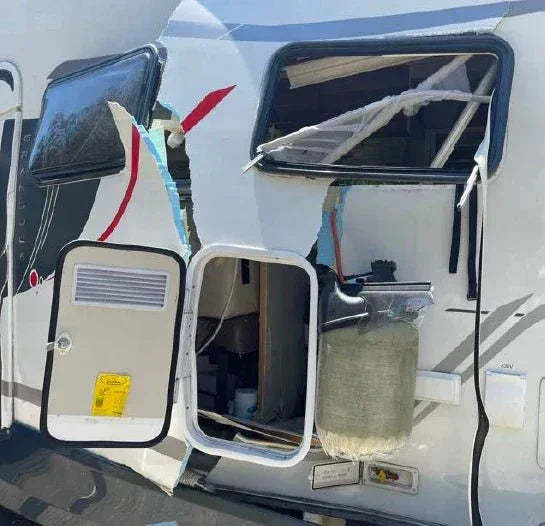
An overfilled gas cylinder from an Eastern European country exploded after being exposed to sunlight for a certain period of time, resulting in the vehicle being completely destroyed.
This not only represents a significant hazard, but is also a violation of international dangerous goods regulations.

Unfortunately, the gas control vignette doesn’t help either!
Conclusion:
-
Only have LPG tanks installed by specialist companies.
-
Only use approved and correctly registered tank systems.
-
Avoid filling commercially available gas cylinders abroad.
-
Find out in advance about the applicable regulations in the destination country.
Safety comes first – for you, your fellow passengers and your vehicle.
🔒 Legal notice on filling gas cylinders abroad
Strict ban on filling foreign gas cylinders abroad
It is expressly forbidden to have gas cylinders that are not the property of the user filled abroad.
This particularly applies to the so-called depot bottles of gas suppliers, for example:
-
Vitogaz
-
FLAGA
-
Westfalengas
-
Multigas
-
Globalgas
-
Tyczkagas
-
Primagas
-
Progaz
...and other providers of rental or exchange bottles.
🔹 These deposit bottles remain the permanent property of the respective gas suppliers.
🔹 Filling may only be carried out by the owner – and only at specially equipped facilities by trained specialists .
⚠️ Special note for overseas travel
When shipping abroad (e.g., by container or RoRo ship), many shipping companies require a gas-free certificate . This means:
-
The gas container (cylinder or tank) must be emptied and, if necessary,
-
have been flushed or pressurized with nitrogen .
👉 This also applies:
Such measures are only permitted on privately owned containers – not on gas industry depot cylinders !
✅ Recommendation: Own tank instead of depot bottle
In most cases, installing a permanently installed LPG tank in the vehicle is recommended. Advantages:
-
They are the property of the user.
-
They are suitable for operation abroad.
-
They have safety valves to prevent overfilling and overpressure.
-
They can be legally filled at LPG filling stations in many countries.
⚠️ Please note: Such a tank must be professionally installed and registered in the vehicle registration document .
Conclusion:
-
Deposit bottles may not be filled abroad or certified as gas-free.
-
When traveling, use only approved proprietary containers or permanently installed gas tanks .
-
This is the only way to meet the legal and safety requirements for gas supplies while on the move and on overseas journeys.
Source: LPG Working Group